Research and a writing exercise shared with peers to bring attention to overlooked history near Asheville School.
A history I had walked past
I had passed Sulphur Springs Cemetery countless times on my way to Ingles without noticing it. When our history teacher told us about a burial ground for enslaved people near school, I realized how much history I had missed in a landscape I thought I knew.
My notebook suddenly felt woefully insufficient. It could preserve what people chose to tell me, but not what I had failed to see. I had treated culture as something spoken and shared, overlooking stories embedded in the landscape itself.
Sharing this research and exercise with my peers became a way to draw attention to that history. I wanted students to recognize Asheville’s place in American history and to look more carefully at the ground we pass every day.
Research materials
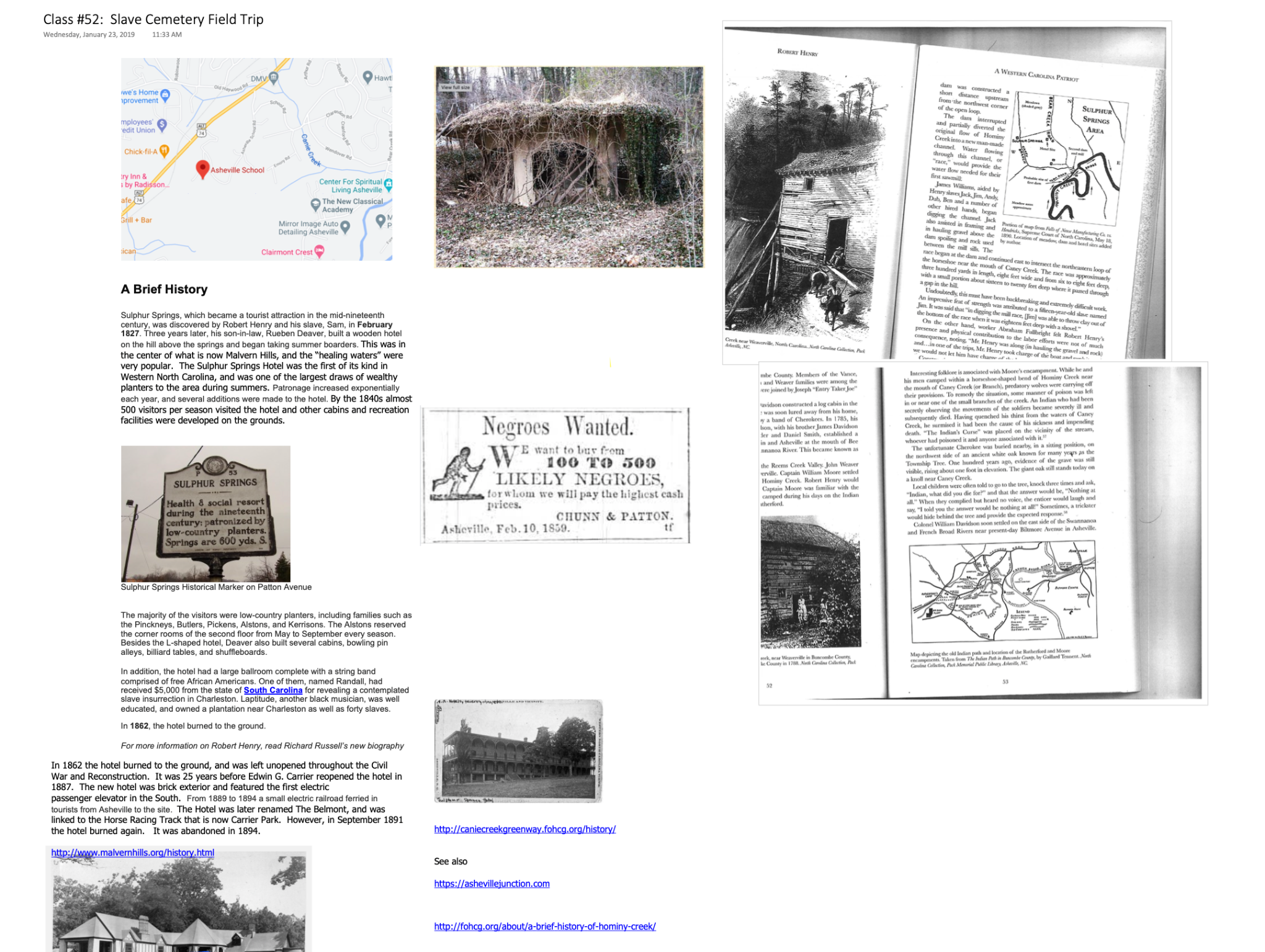
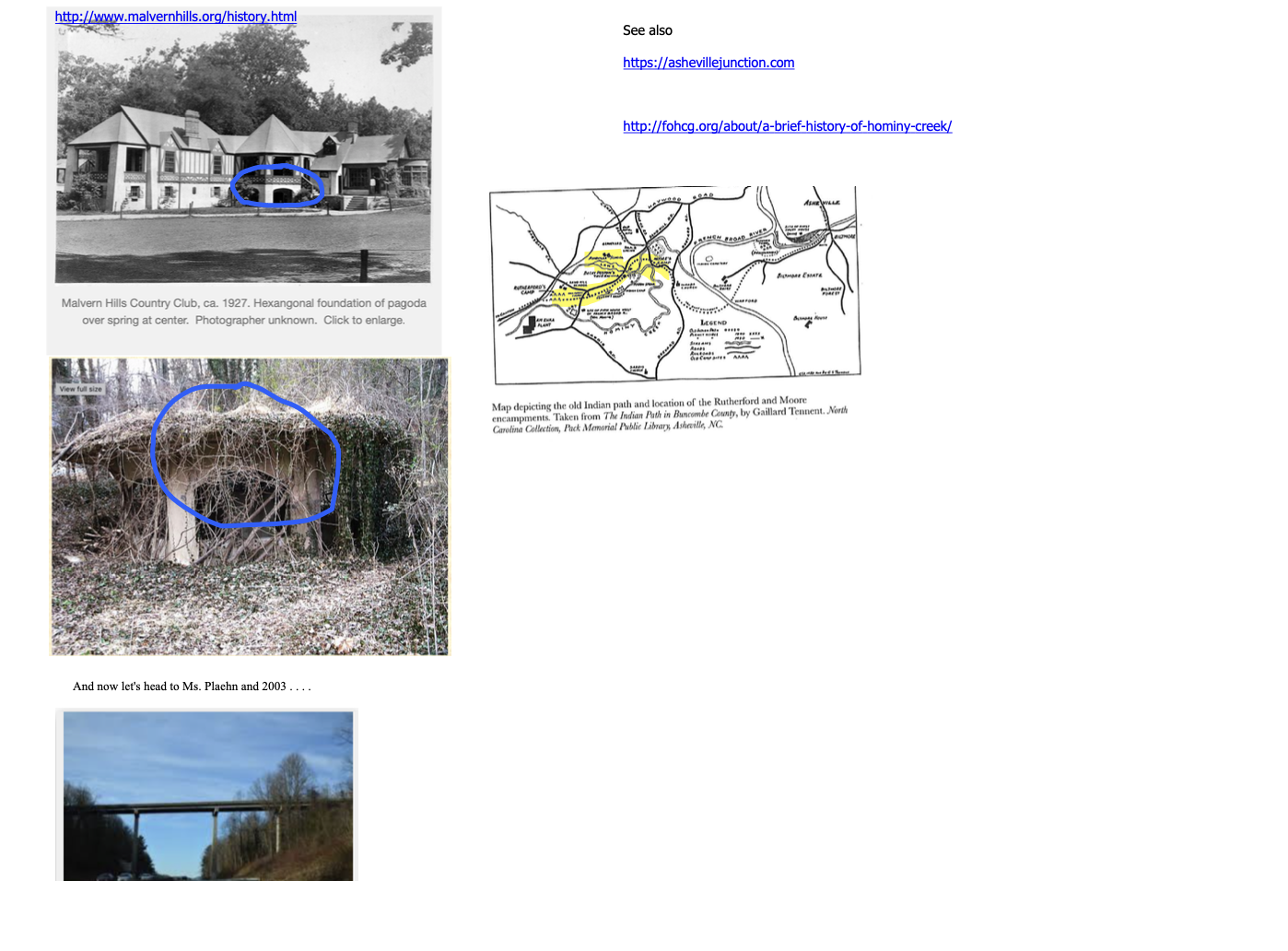
These materials bring together local-history references and cemetery photographs with accounts of contested Confederate commemoration. They provide a starting point for considering whose stories remain visible and how a community remembers the people buried nearby.
Sulphur Springs and the surrounding landscape. Select the image to view it at full size.The cemetery and public memory. Select the image to view it at full size.
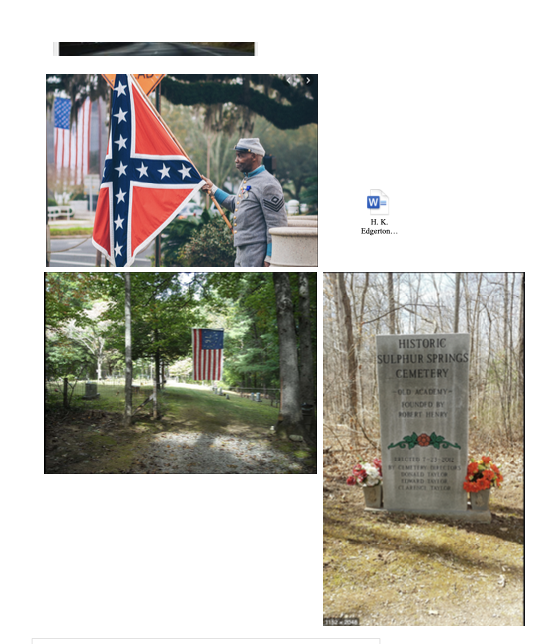
H. K. Edgerton and the cemetery
The accompanying document reproduces accounts from Southern Heritage 411 and the Southern Legal Resource Center concerning Edgerton’s cemetery work and Confederate-flag advocacy near Asheville School. These are the organizations’ own accounts, included for critical examination of their language and perspective, rather than as a neutral history of the cemetery.
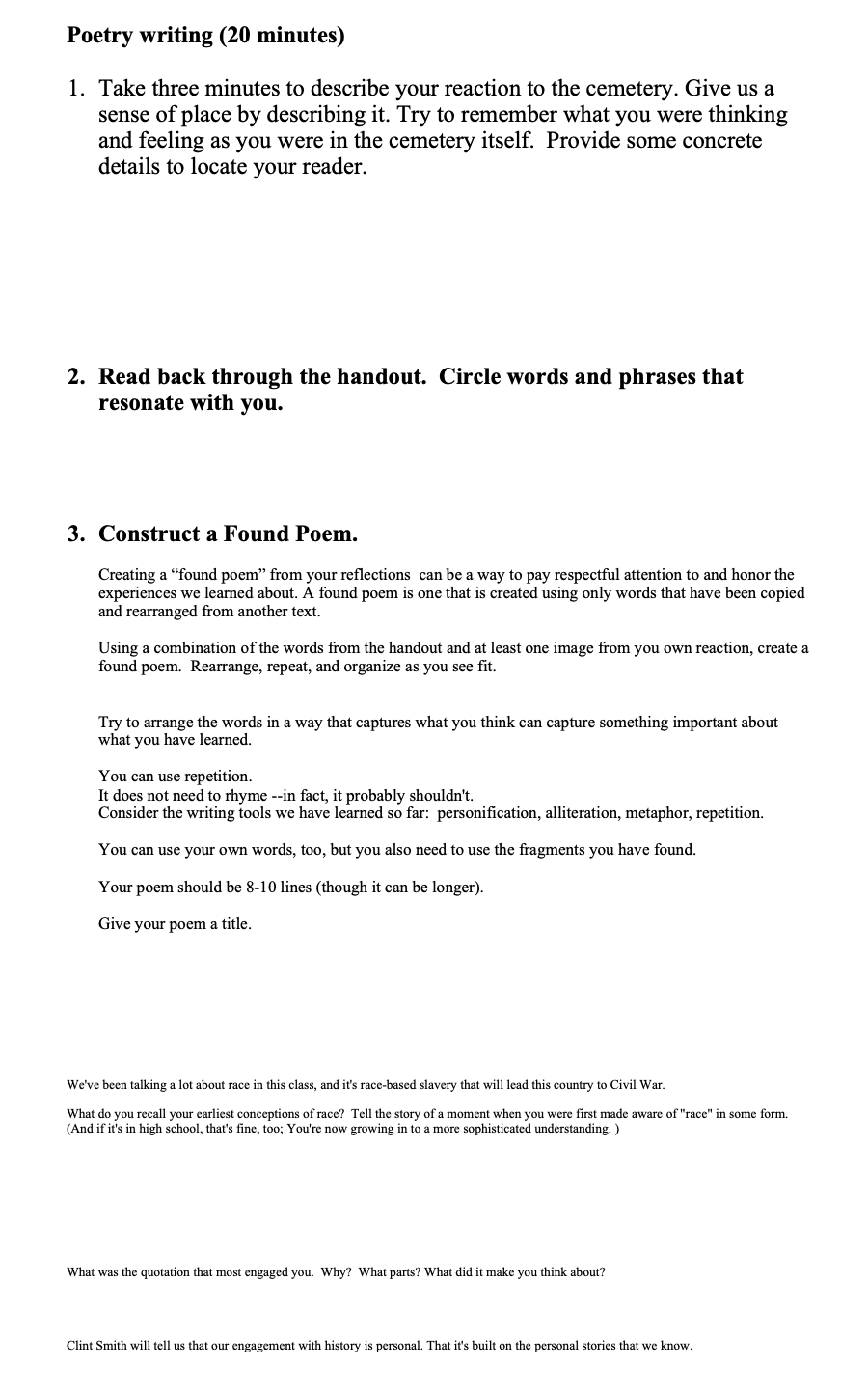
The 20-minute exercise begins with a brief reflection on the cemetery, asking students to recall concrete details and their own reactions. Students then revisit the handout, select words that resonate, and compose a found poem of roughly eight to ten lines using those fragments alongside an image from their own response.
The exercise offers a way to give sustained attention to the lives and histories encountered during the visit. Further questions invite students to reflect on their earliest understandings of race and the passages that most challenged or engaged them.
The exercise shared with peers. Select the image to read the original instructions at full size.Download the writing exercise ↗